Pingkou Jiaohe (平口胶合): Glued Edge Joints
Rubbed joint · 平口
Not every Chinese board joint hides a clever tenon. Thick boards were often joined with nothing at all but glue.
The secret of this plain glued edge was in the planing.
- Chinese
- 平口胶合 · píngkǒu jiāohé
- Joins
- Thick boards edge to edge
- Found in
- Thick tops and panels
- Signature parts
- Dead-straight edges · glue
- Compare
- Loose-tenon board joint
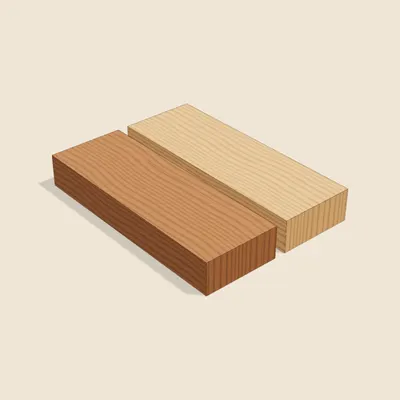
How it works
Thick boards
Wang Shixiang notes that thick boards, such as those for the panels of a luohan bed or the tops of trestle tables, were commonly joined with a plain glued edge, without battens.
Dead straight
The two edges had to be planed perfectly straight with a plane on a very long body, so that the two faces met everywhere. Only then would the glue hold.
Other ways
Thick boards could also be joined with planted straight tenons or sliding keys. Bow-tie inlays across the seam were occasionally used, but fine furniture avoided them because they spoil the surface.
How it's made
 Step 1
Two boards
Take two thick boards.
 Step 2
Plane straight
Plane one edge dead straight on a long plane.
 Step 3
The other edge
Plane the other edge the same.
 Step 4
Faces meet
The faces must meet everywhere.
 Step 5
Glue
Glue them; no tenons.
 Step 6
No battens
No battens are used either.
Variations
Loose tenons
Thick boards may be joined with planted straight tenons instead.
Sliding keys
Or with dovetailed sliding keys.
Can you CNC this?
Yes, with small changes
There is no joinery to mill. The challenge is a dead-straight edge, which a jointer, a long hand plane or a straight-edge router pass gives more easily than a CNC.
General note: a round cutter cannot leave a sharp inside corner, so every recess keeps the tool radius. Round the mating edges or add dogbone reliefs. Sloping faces, undercuts and curves may need special bits, extra setups or more axes.
Free STL downloads (one file per part)
Proportions are illustrative, not measured dimensions. The files are unitless: scale them to suit and check fits and allowances before cutting. Each file is a closed (watertight) solid with its mortises and slots already cut, exported in its assembled position, ready to import into CAM or modelling software. Licence: CC BY 4.0 (credit: Chinese Joinery).
Related joints
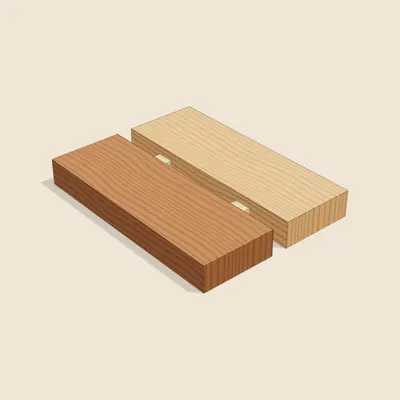
Loose-Tenon Board Joint
zāisǔn pīnbǎnThick boards are joined edge to edge with separate straight tenons planted into mortises in both edges.
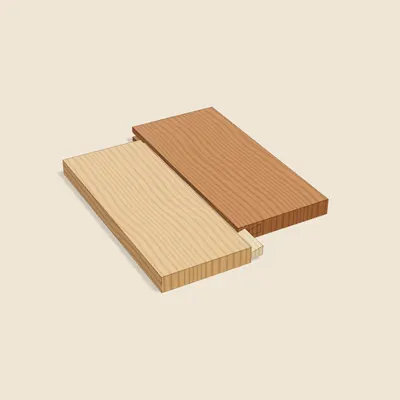
Longfeng Board Joint
lóngfèng sǔnA half-dovetail tongue on one board slides into a matching groove in the next, so the seam can neither step nor pull apart.
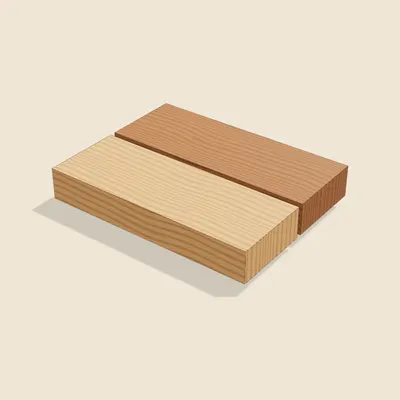
Butterfly Key
yíndìng sǔnA bow-tie key, two dovetails back to back, let in across a seam to lock thick boards together.
Questions
What is a plain glued edge joint?
Thick boards glued edge to edge after planing the edges perfectly straight.
Why no tenons?
On thick boards a true, glued edge was enough.
Why a long plane?
Only a long plane gives an edge straight enough for the faces to meet everywhere.