The joints
Every joint comes with a 3D model you can rotate and take apart, plus step-by-step diagrams. More are on the way.
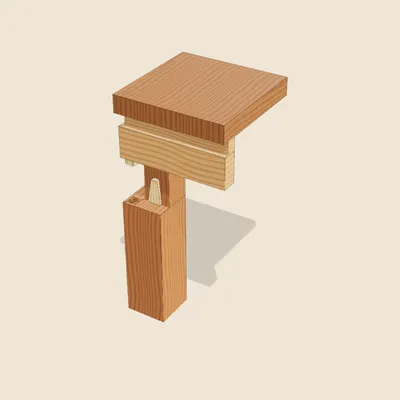
Baojian Joint
bàojiān sǔnThe hidden lock behind every waisted Ming table corner: a mitred shoulder, a triangular tenon and a tapered pin.
Explore the joint →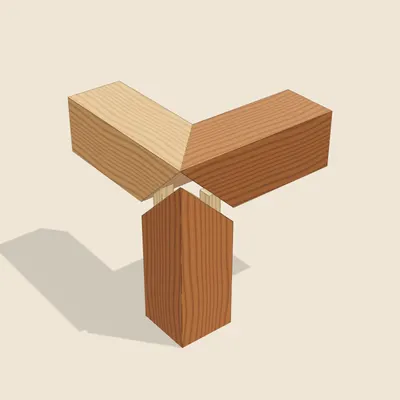
Zongjiao Joint
zòngjiǎo sǔnThree members, three 45° mitres, one perfect point: the corner joint of flush-sided tables and cabinets.
Explore the joint →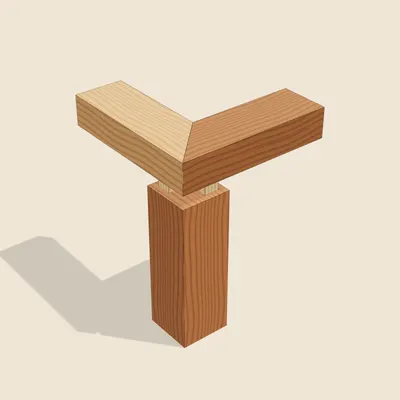
Long-and-Short Tenons
chángduǎn sǔnTwo tenons at right angles on the top of a leg: a long one for the long side, a short one for the end.
Explore the joint →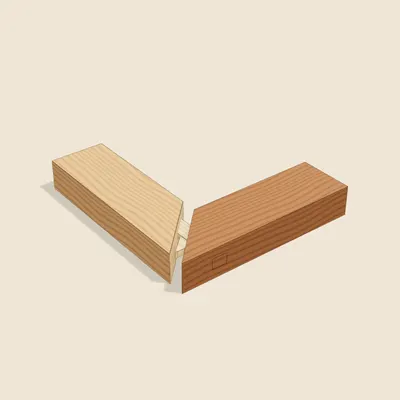
Mitred Frame Joint
géjiǎo sǔnThe 45° corner of every Chinese frame-and-panel top: a tenon through the end plus a little triangular tongue.
Explore the joint →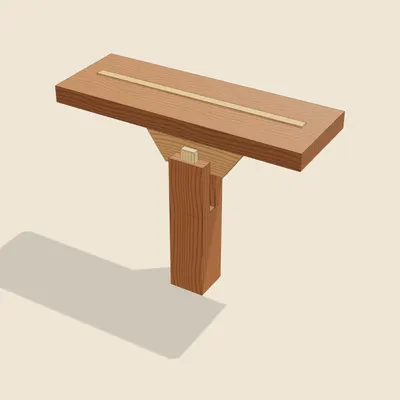
Elongated Bridle Joint
jiātóu sǔnThe leg top is slotted to clamp the apron and its spandrel heads, then tenons into the top.
Explore the joint →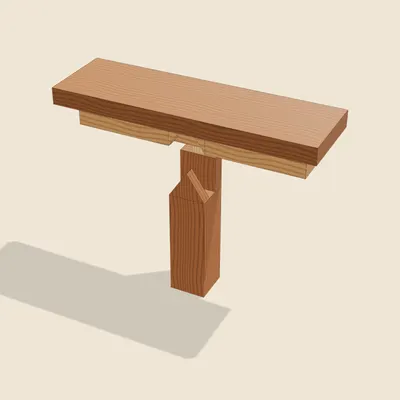
Inserted-Shoulder Joint
chājiān sǔnThe leg is cut to a pointed shoulder that the grooved apron straddles, finishing flush; the heavier the top, the tighter it grips.
Explore the joint →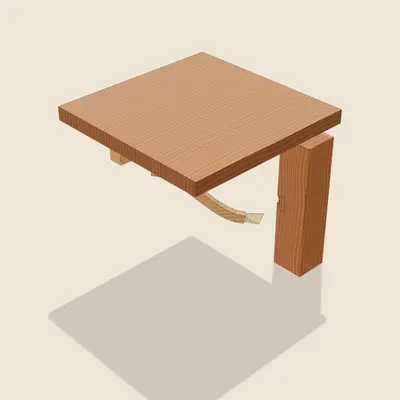
Giant’s-Arm Brace
bàwáng chéngAn S-curved brace from the leg up to the underside of the top, hooked into the leg and locked with a wedge.
Explore the joint →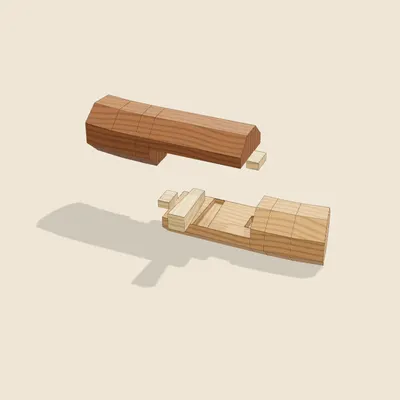
Wedged Scarf Joint
xiēdīng sǔnCurved pieces lapped with hooked tips and locked by a tapered key through the middle: how a horseshoe chair arm is built.
Explore the joint →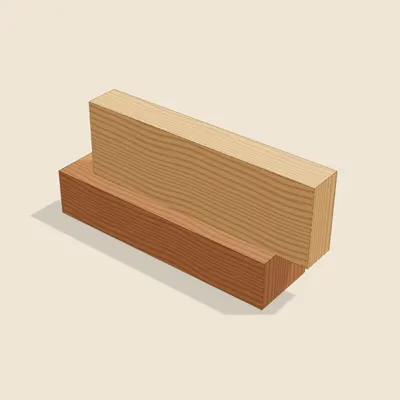
Sliding Locking Key
zǒumǎ xiāoA dovetailed key planted in one part drops into the wide end of a slot and slides to the narrow end to lock.
Explore the joint →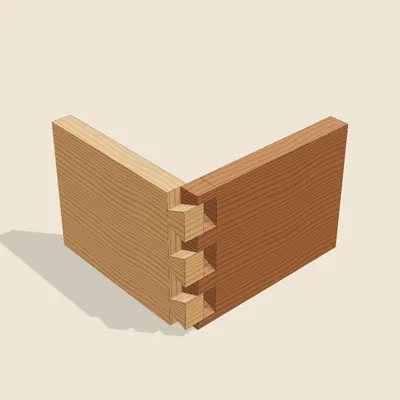
Dovetail Joint
yànwěi sǔnA tenon wider at the tip than at the root, so it can’t pull out: found in boxes, drawers, tables and temple beams.
Explore the joint →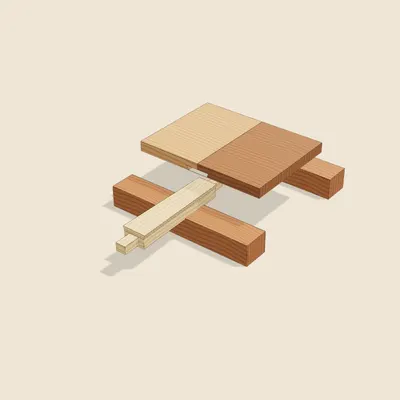
Sliding Dovetail Batten
chuāndàiA tapered dovetail batten driven across the back of a panel, its ends tenoned into the frame: the reason old tabletops stay flat.
Explore the joint →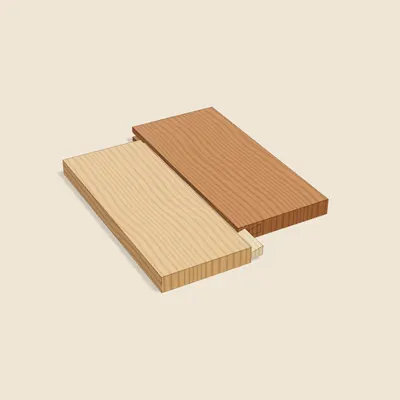
Longfeng Board Joint
lóngfèng sǔnA half-dovetail tongue on one board slides into a matching groove in the next, so the seam can neither step nor pull apart.
Explore the joint →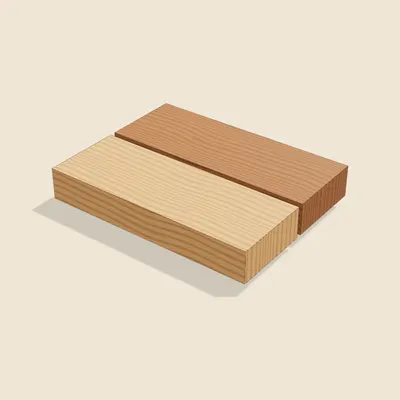
Butterfly Key
yíndìng sǔnA bow-tie key, two dovetails back to back, let in across a seam to lock thick boards together.
Explore the joint →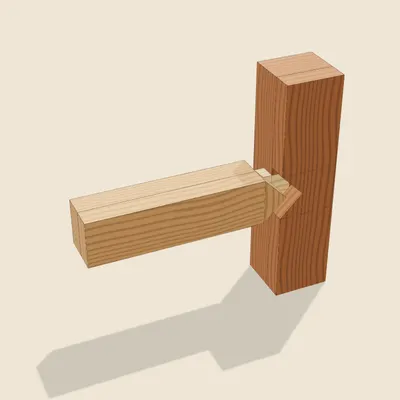
Mitred-Shoulder Joint
géjiān sǔnWhere a rail meets a post, its outer face is cut to a point that fits a matching notch, so mouldings meet cleanly.
Explore the joint →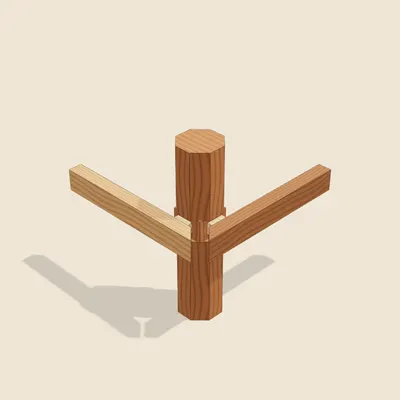
Wrap-Around Stretcher
guǒtuǐ chéngStretchers stand proud of a round leg and meet in a mitre at the corner, imitating bent bamboo.
Explore the joint →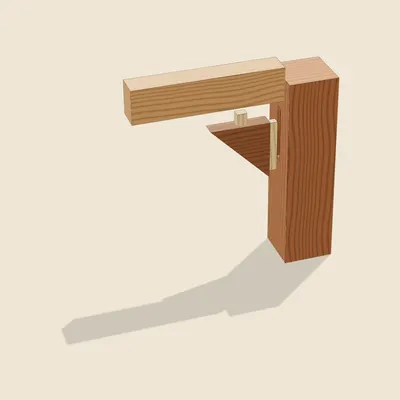
Corner-Bracket Joint
tuōjiǎo sǔnThe small carved bracket under a table corner: tongued into a groove in the leg and pegged into the apron.
Explore the joint →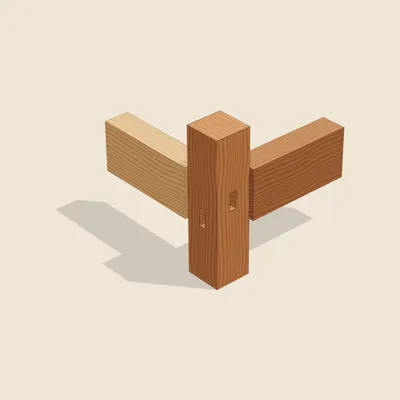
Big-In, Small-Out Tenon
dàjìn xiǎochū sǔnPart blind, part through: a big tenon enters, a small one shows. It lets two stretchers share a leg without weakening it.
Explore the joint →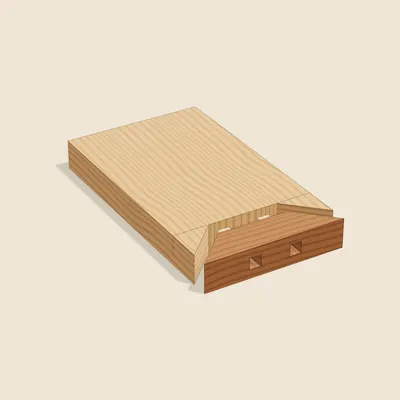
Breadboard End
pāi mǒtóuA cross-grain strip mitred and tenoned onto the end of a thick board: no end grain shows, and the board resists splitting.
Explore the joint →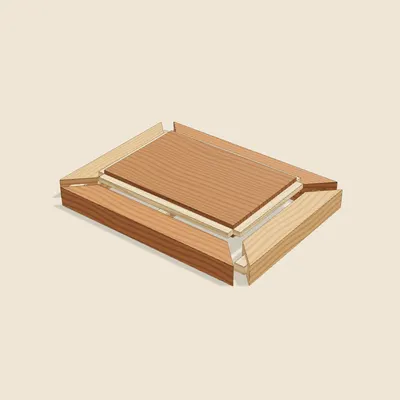
Frame and Floating Panel
cuánbiān dǎcáo zhuāngbǎnA mitred frame grooved on the inside, a thin panel with a tongued edge floating in the groove, and battens underneath.
Explore the joint →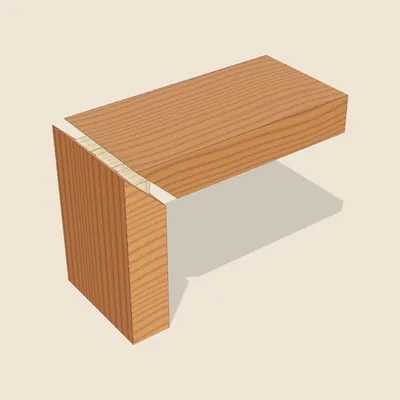
Hidden Mitred Dovetail
mèn sǔnDovetails hidden inside a mitred corner: once closed, only a single seam line shows.
Explore the joint →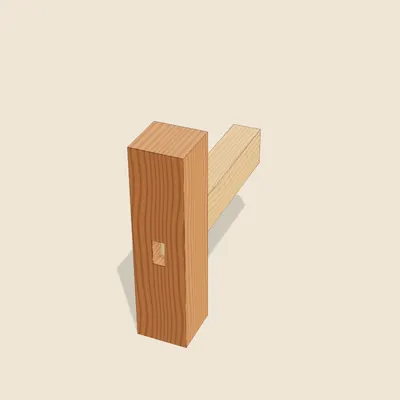
Through Tenon
tòu sǔnThe tenon runs right through and its end grain shows on the far side: strong, but less neat than a blind tenon.
Explore the joint →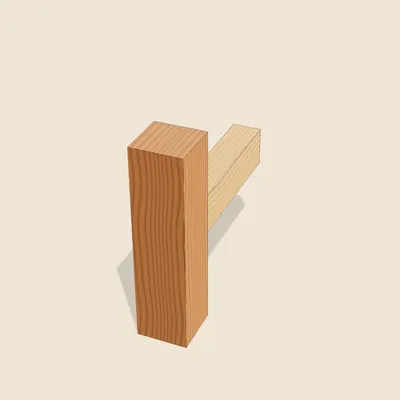
Blind Tenon
bàn sǔnThe tenon stops inside the post, so nothing shows on the outside: neat, a little less strong than a through tenon.
Explore the joint →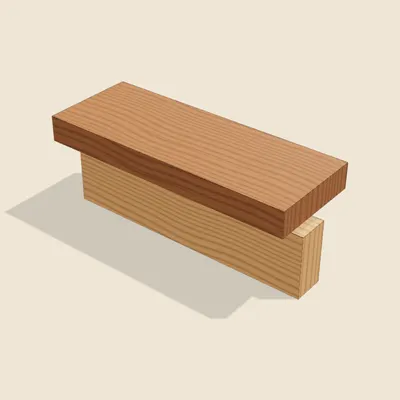
Loose Tenon
zāi xiāoThe tenon is a separate piece of wood planted into mortises in both parts, easy to replace if it wears.
Explore the joint →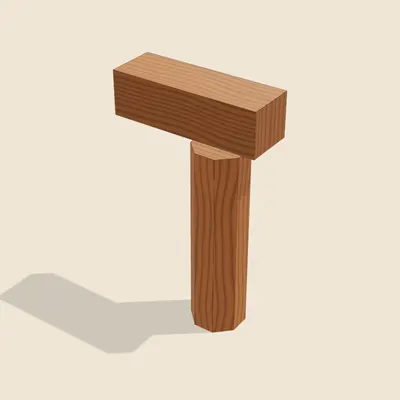
Column-Head Tenon
mántou sǔnA short square tenon on the column head fits a socket under the beam, so the beam can’t slide off.
Explore the joint →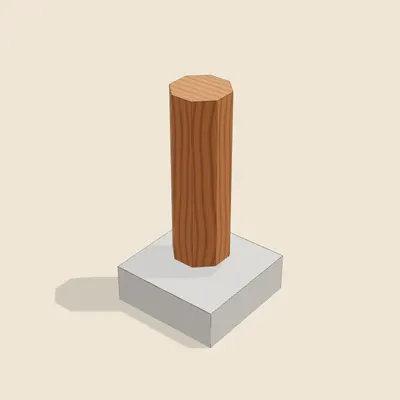
Column-Foot Tenon
guǎnjiǎo sǔnA short round tenon at the column foot drops into a socket in the stone base, so the column can’t shift.
Explore the joint →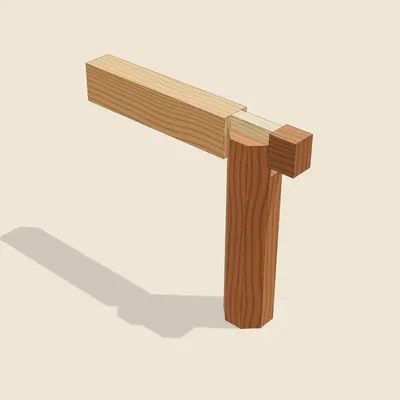
Clasping-Head Tenon
gūtóu sǔnThe beam drops into a slot across the column head and runs on past it; the head beyond “clasps” the column.
Explore the joint →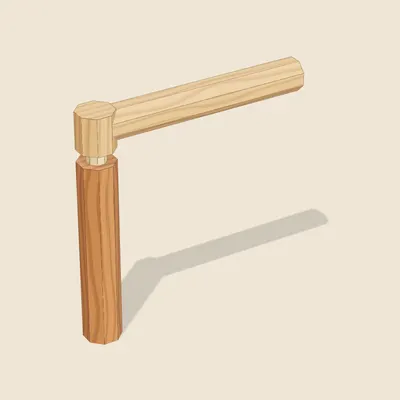
Pipe-Bowl Joint
wā yāndàiguō sǔnThe rail end turns down and is hollowed from below like a pipe bowl to sit on the post’s tenon: a rounded corner with no projecting end.
Explore the joint →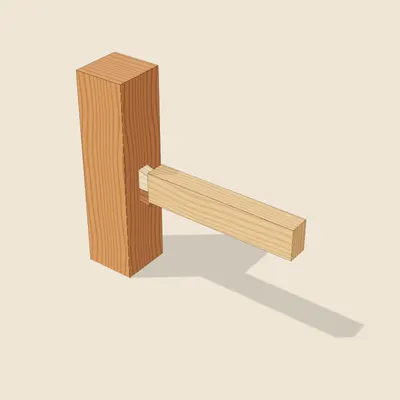
Hook-and-Wedge Tenon
gōuguà sǔnA right-trapezoid tenon enters low in a taller mortise, is pushed up so the sloping faces hook, and a wedge fills the gap below.
Explore the joint →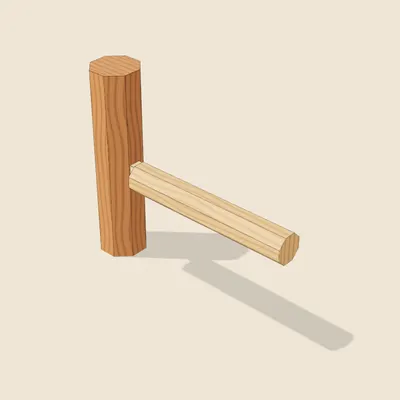
Flying Shoulder
piāo jiānRound stretcher flush with a round leg: tenon on the inner half, the outer half a shoulder that “floats” over the curve.
Explore the joint →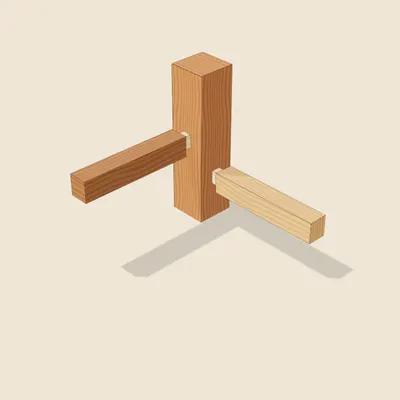
Staggered Stretchers
gǎn chéngStretchers from the front and side meet a leg at different heights, so their mortises never weaken it at one spot.
Explore the joint →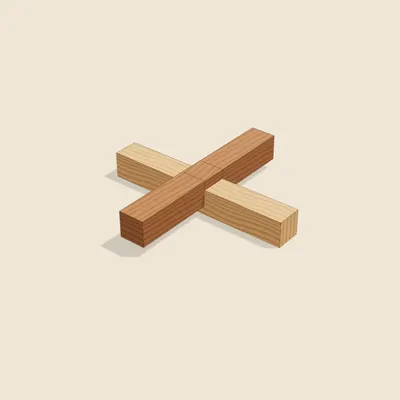
Cross-Halving Joint
shízì chéngTwo members cross, each cut away by half its depth, and drop together flush.
Explore the joint →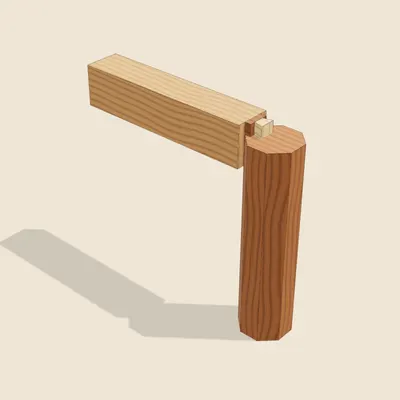
Dovetail with Sleeve Shoulder
xiùjiān yànwěi sǔnA beam end with a dovetail and a short sleeve shoulder drops into a socket in the column head and can’t be pulled out.
Explore the joint →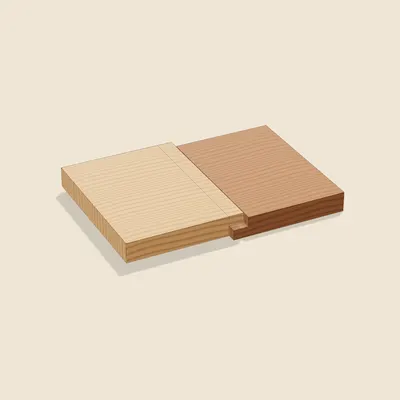
Shiplap Joint
qǐkǒu sǔnEach board edge keeps half its thickness as a lip; the lips overlap, so the seam never opens straight through.
Explore the joint →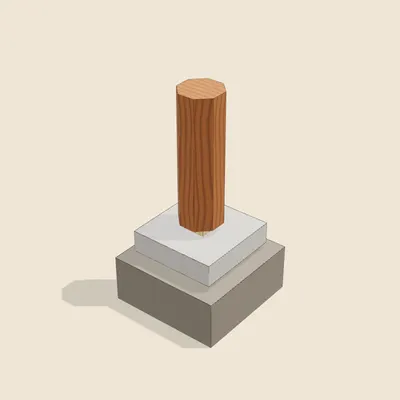
Through-Base Tenon
tàodǐng sǔnA long square tenon at the column foot passes through a hole in the base stone into the foundation below.
Explore the joint →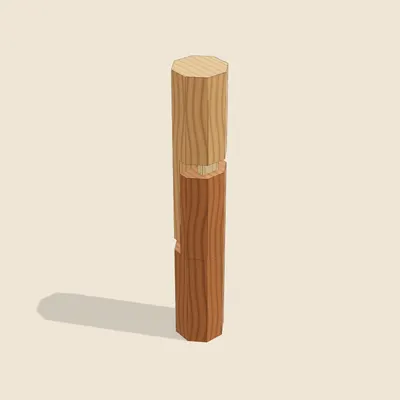
Palm Splice
bāzhang sǔnOld column and new foot are each cut to a half-thickness “palm”; the palms overlap, short tenons lock their ends, and iron hoops bind it.
Explore the joint →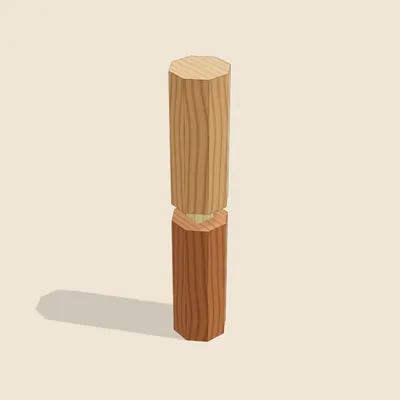
Hidden Dowel
àn xiāoTwo lengths meet end to end and a square pin hidden inside the joint keeps them in line: nothing shows outside.
Explore the joint →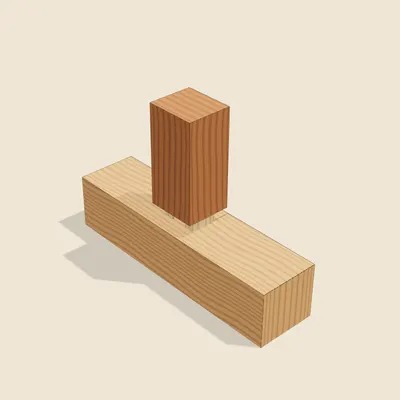
Twin Stub Tenons of a Short Post
guāzhù shuāng bàn sǔnA short post stands on the back of a beam on two blind tenons, its shoulders shaped to the curve of the beam.
Explore the joint →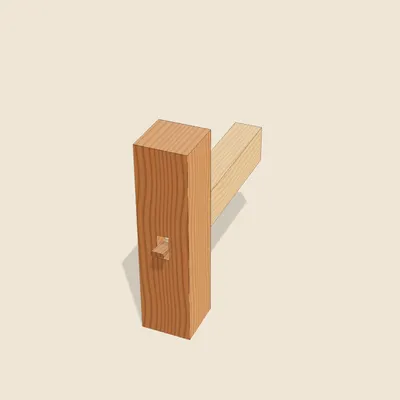
Wedged Through Tenon
pòtóu xiēA kerf is sawn into the end of a through tenon; once the tenon is in, a wedge is driven in and spreads it tight.
Explore the joint →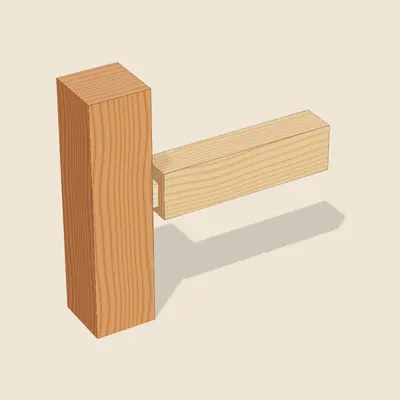
Tightening Wedge
jǐ xiēThe tenon is made slightly smaller than the mortise, and a thin tapered wedge is driven into the gap to squeeze the joint tight.
Explore the joint →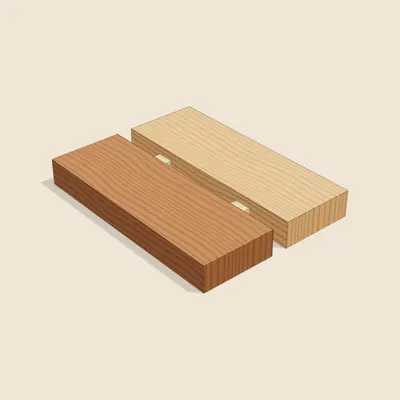
Loose-Tenon Board Joint
zāisǔn pīnbǎnThick boards are joined edge to edge with separate straight tenons planted into mortises in both edges.
Explore the joint →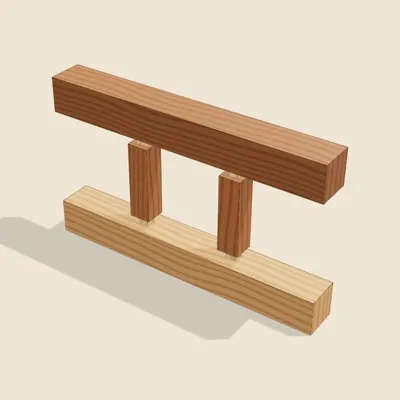
Short Struts
ǎilǎoShort vertical struts between a stretcher and the member above, tenoned at both ends.
Explore the joint →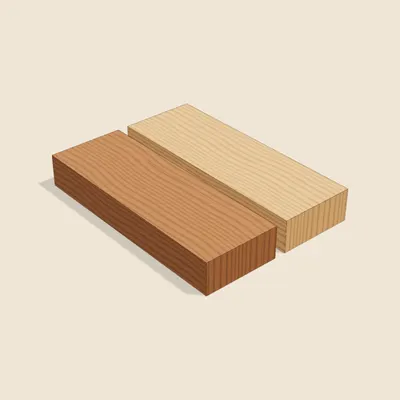
Plain Glued Edge Joint
píngkǒu jiāohéTwo thick boards with edges planed dead straight on a very long plane, glued face to face: no tenons, no battens.
Explore the joint →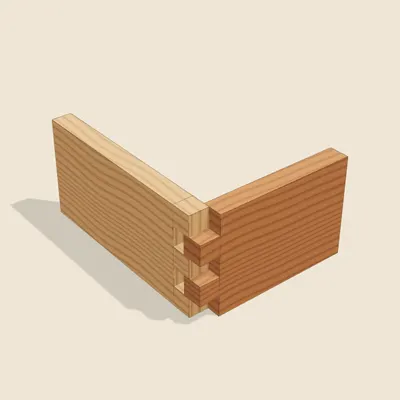
Open Straight-Tenon Corner
míngsǔn jiǎo jiēhéStraight tenons cut open on the board ends, interlocking at the corner and showing on both faces.
Explore the joint →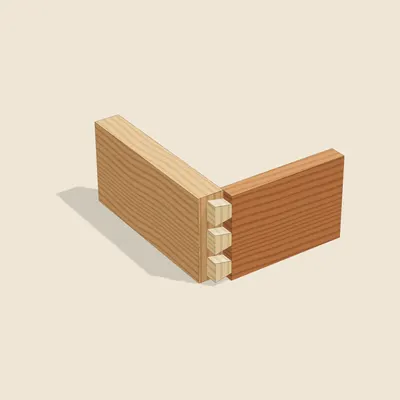
Half-Blind Dovetail
bànyǐn yànwěi sǔnDovetails on the side board fit sockets that stop short of the front face, so the joint shows on one face only.
Explore the joint →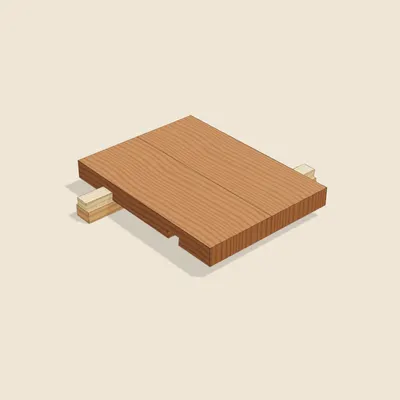
Opposed Tapered Battens
chāoshǒu sǔnTapered dovetail battens are driven in from opposite sides, one big end on each side, pulling the board seams tight.
Explore the joint →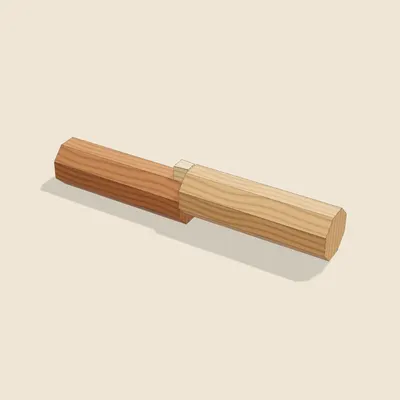
Purlin Dovetail
héng lǐn yànwěiWhere two purlins meet over a beam head, one carries a dovetail half its diameter high that drops into a socket in the other.
Explore the joint →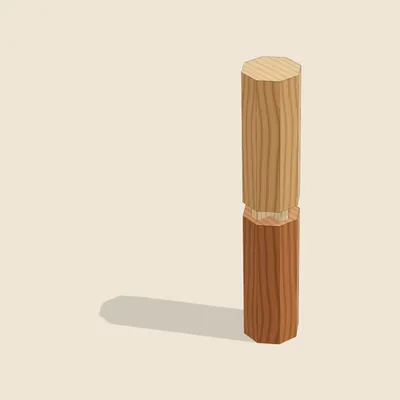
Cross Insert Splice
chājiē sǔnOne column length ends in a cross-shaped tenon that plugs into a cross-shaped mortise in the other; iron hoops bind the joint.
Explore the joint →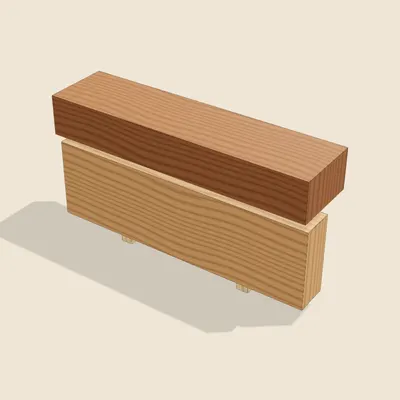
Through Pin
tòu xiāoA planted pin made long enough to pass right through a heavy apron and into the frame above it.
Explore the joint →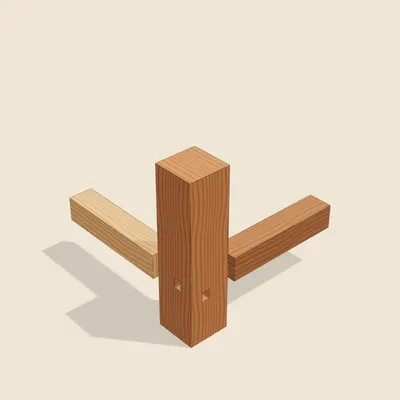
Interlocking Cabinet Stretchers
guìzi dǐchéng hùràngFront and side bottom stretchers meet the leg at the same height: one keeps the lower half of its tenon through, the other the upper half.
Explore the joint →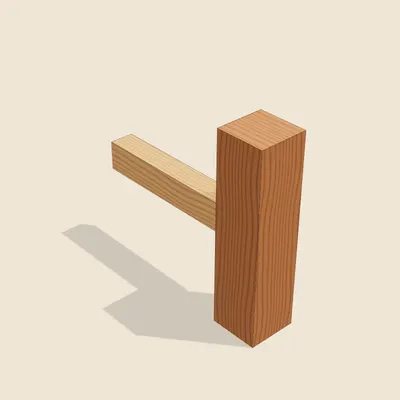
Square Shoulder
qí jiānbǎngA T-joint with a shoulder cut straight across, no mitre: used where rail and leg are not flush.
Explore the joint →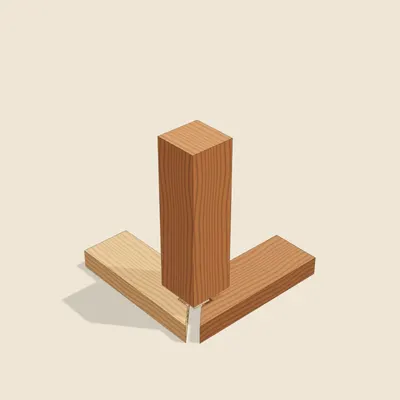
Leg and Base Frame
tuǐzú yǔ tuōníThe base frame is mitred at each corner; at the seam a socket wide at the bottom takes a matching tenon on the foot, and the frame is assembled around it.
Explore the joint →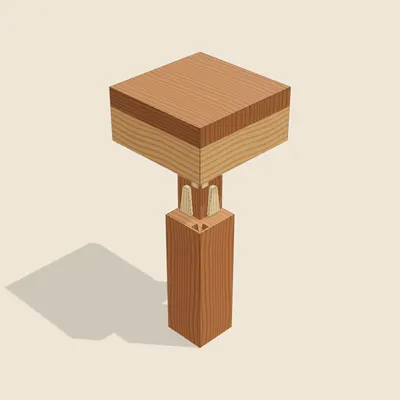
Flush-Sided Corner
sìmiàn píngNo waist: the leg is mitred right under its long-and-short tenons, and a half-dovetail pin on each face hooks the apron, so leg, apron and top all lie flush.
Explore the joint →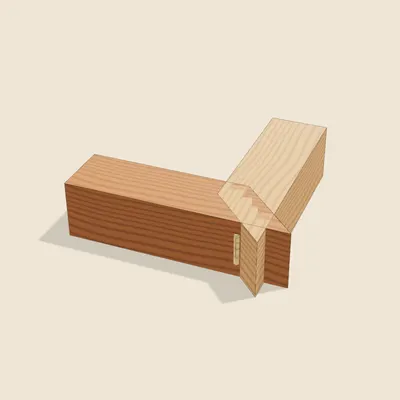
Hidden Mitre With a Loose Block
fāngcái mènsǔn jiǎo jiēhéBoth members are cut to 45°, a socket is cut in each mitre face, and a rectangular block is glued into both: only a mitre line shows.
Explore the joint →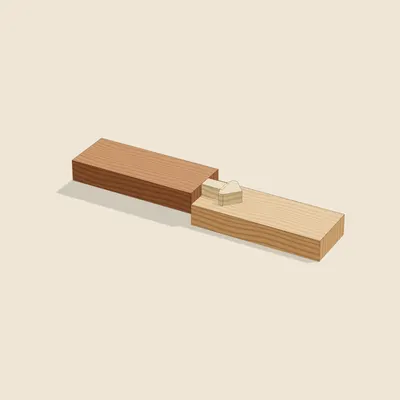
Mantis-Head Splice
tángláng tóu sǔnOne member ends in a narrow neck and a wide “mantis head”, cut through its full depth; it drops from above into a matching socket in the next member, so the two cannot be pulled apart.
Explore the joint →