Xieding Sun (楔钉榫): The Wedged Scarf of Round Chairs
Xieding sun · 销钉榫 · 钥匙榫 (key joint)
The sweeping arm of a Chinese horseshoe chair looks like a single bent rail. It isn’t. Wood that curved can’t come from one piece without short grain that would snap, so the arm is made of several curved sections joined end to end.
The joint that holds them is the xieding sun, the wedged scarf joint, and it is so neat the seams are hard to find.
- Chinese
- 楔钉榫 · xiēdīng sǔn
- Also called
- 销钉榫, 钥匙榫 (key joint)
- Joins
- Curved members end to end
- Found in
- Horseshoe-chair arms, round tables and stands
- Signature parts
- Half laps · small hooked tips · tapered key
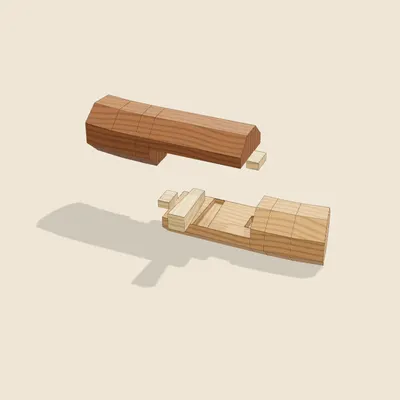
How it works
Lapped halves
Each of the two curved pieces is cut away by half its thickness at the end, so they overlap like two hands laid together.
Hooked tips
That alone would slide apart. So each lap ends in a small stepped tenon that drops into a groove in the other piece. Now the halves can’t move up or down relative to each other.
The key
Finally a square hole, slightly larger at one end, is cut through the middle of the joint, and a matching tapered key is driven in. It stops the hooked tips sliding back out, so the joint holds every way.
How it's made
 Step 1
Cut the lap
Cut away half the thickness at the end of each curved piece.
 Step 2
Form the hooked tip
Leave a small stepped tenon at the end of each lap.
 Step 3
Cut the groove
Cut a groove in each piece to take the other’s tip.
 Step 4
Lap the halves
Bring the two pieces together so the tips hook into each other.
 Step 5
Drive the key
Cut a tapered square hole through the middle of the joint and drive in a matching key.
 Step 6
Locked
The joint can no longer move up, down or apart.
Variations
Two forms
Wang Shixiang drew two versions of the wedged scarf for curved members.
Curved square stock
Square curved members, such as round frames, use related hidden joints.
Can you CNC this?
Possible, with design or setup changes
If the arm pieces curve only in plan, their outline and the hooked laps can be cut from flat stock in two or more setups. The tapered key and its slot need rounded slot ends or a rounded key. Arm pieces that also curve in section would need 3D surfacing.
General note: a round cutter cannot leave a sharp inside corner, so every recess keeps the tool radius. Round the mating edges or add dogbone reliefs. Sloping faces, undercuts and curves may need special bits, extra setups or more axes.
Free STL downloads (one file per part)
- Arm piece A 扶手段 A · xieding-sun-arm-a.stl
- Arm piece B 扶手段 B · xieding-sun-arm-b.stl
- Tapered key 楔钉 · xieding-sun-key.stl
Proportions are illustrative, not measured dimensions. The files are unitless: scale them to suit and check fits and allowances before cutting. Each file is a closed (watertight) solid with its mortises and slots already cut, exported in its assembled position, ready to import into CAM or modelling software. Licence: CC BY 4.0 (credit: Chinese Joinery).
In museum collections
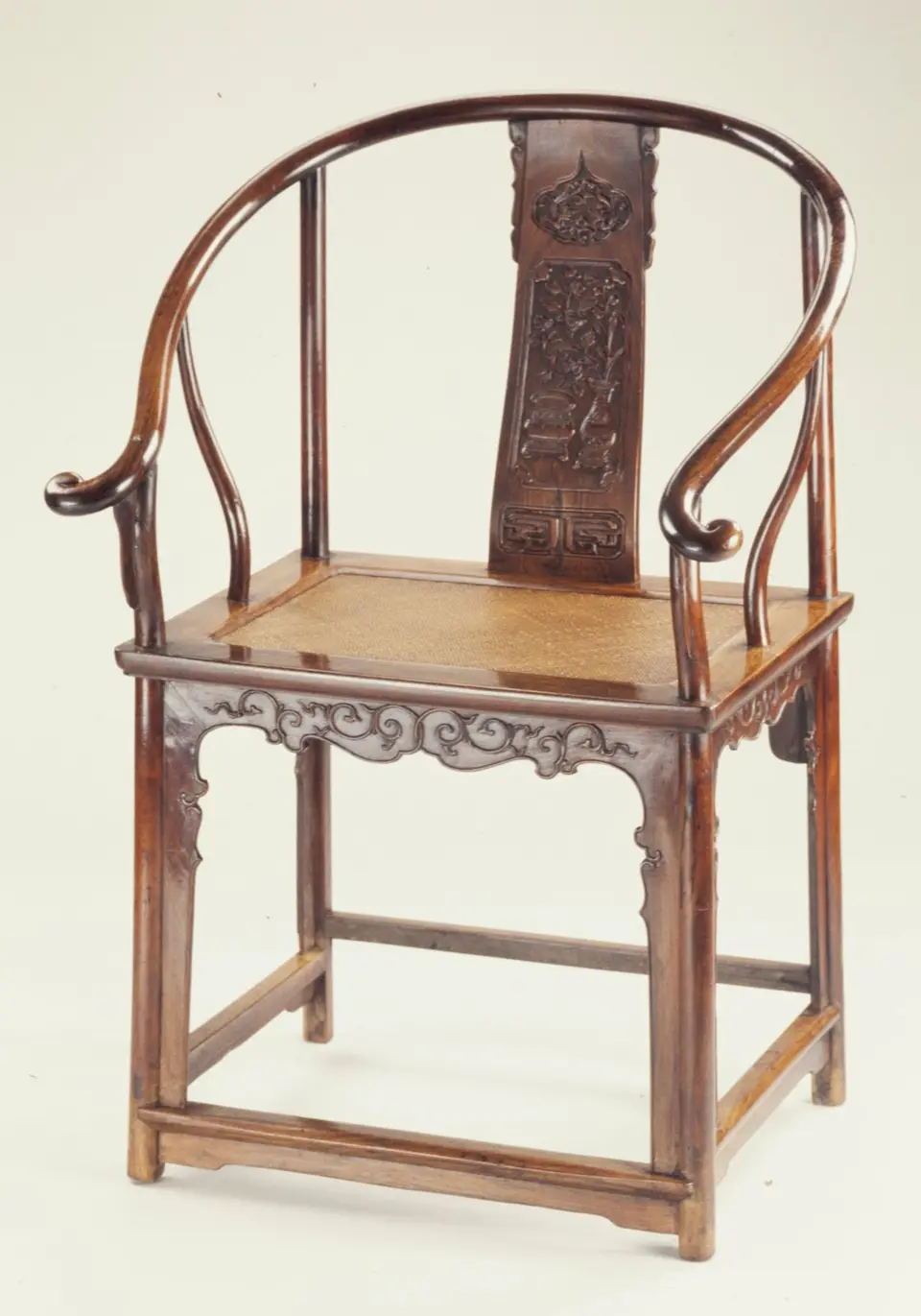
Minneapolis Institute of Art
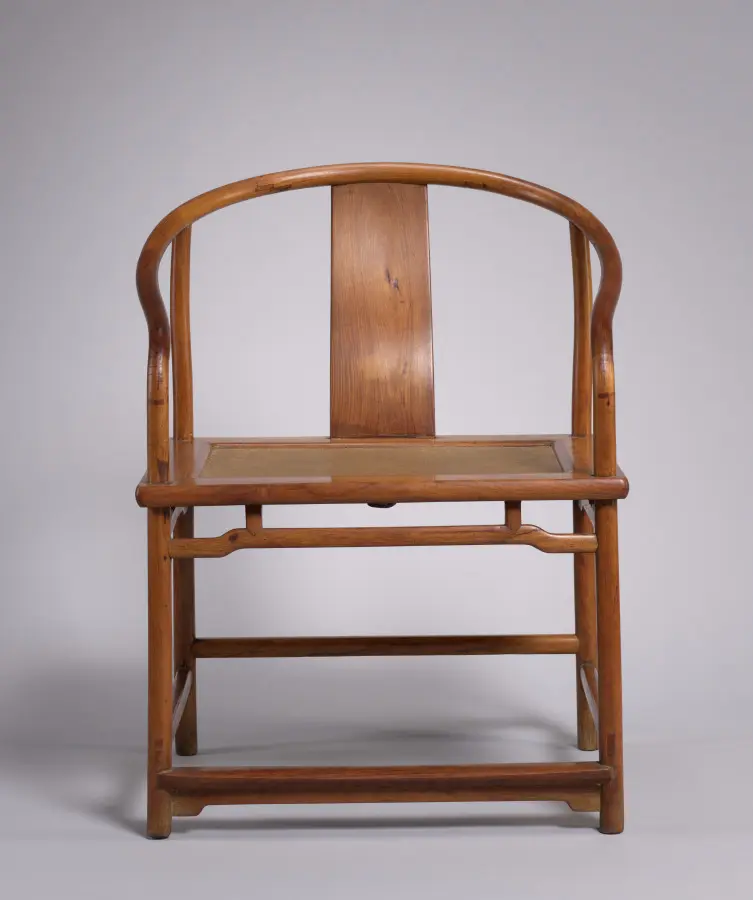
Cleveland Museum of Art
Related joints
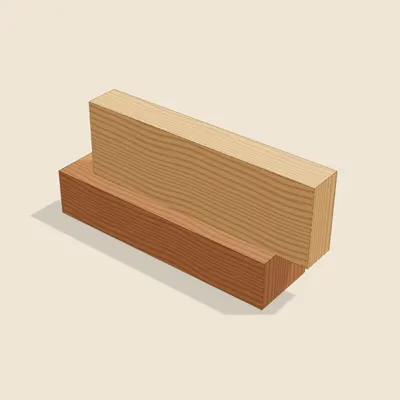
Sliding Locking Key
zǒumǎ xiāoA dovetailed key planted in one part drops into the wide end of a slot and slides to the narrow end to lock.
Dovetail Joint
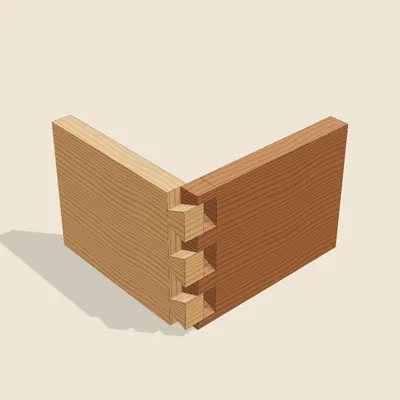
yànwěi sǔnA tenon wider at the tip than at the root, so it can’t pull out: found in boxes, drawers, tables and temple beams.
Mitred Frame Joint
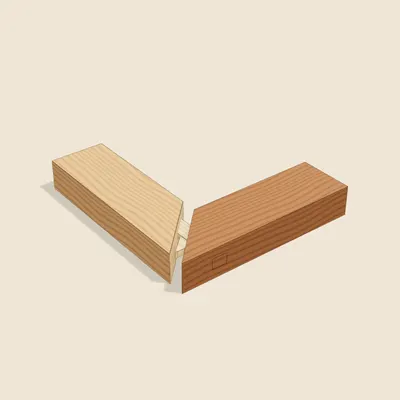
géjiǎo sǔnThe 45° corner of every Chinese frame-and-panel top: a tenon through the end plus a little triangular tongue.
Questions
What is a xieding joint?
A scarf joint for curved members: two half-lapped pieces with hooked tips, locked by a tapered key driven through the middle.
Where is it used?
Most famously in the curved arm rail of the horseshoe chair (圈椅), and in round tables and stands.
What stops it coming apart?
The hooked tips stop movement up and down; the key stops the tips sliding back out.