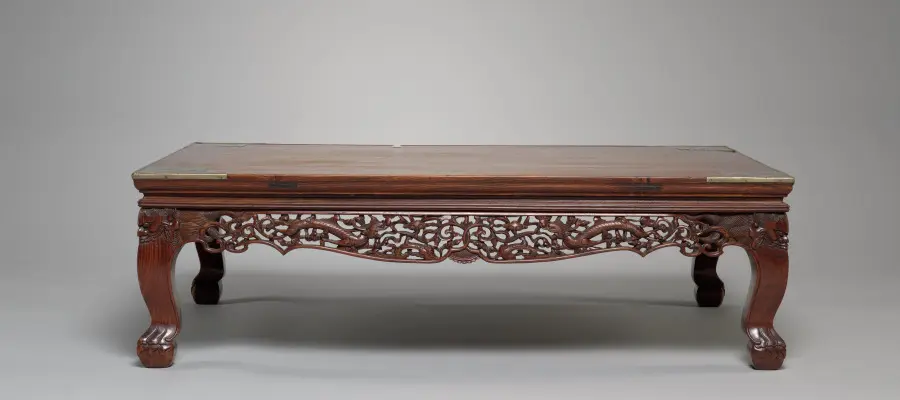
Waisted kang table
A kang table is a low table used on the heated brick platform (kang) of a northern Chinese house. Waisted kang tables are built like waisted tables, only low and wide.
1Top frame and panel
Mitred frame grooved for a floating panel, with battens underneath.
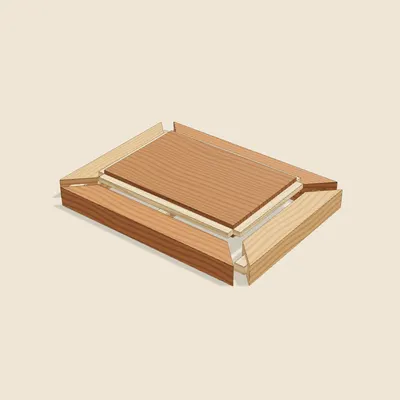
Frame and Floating Panel
cuánbiān dǎcáo zhuāngbǎnA mitred frame grooved on the inside, a thin panel with a tongued edge floating in the groove, and battens underneath.
Explore the joint →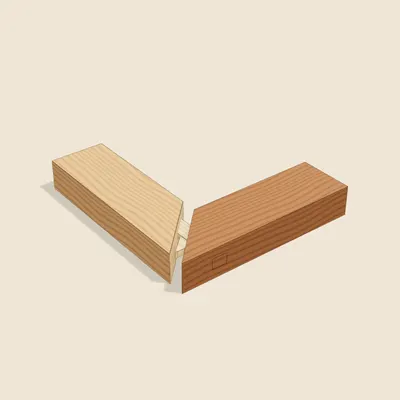
Mitred Frame Joint
géjiǎo sǔnThe 45° corner of every Chinese frame-and-panel top: a tenon through the end plus a little triangular tongue.
Explore the joint →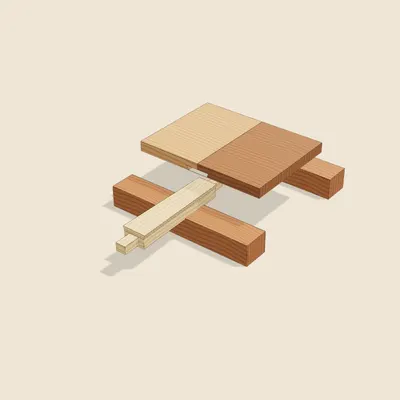
Sliding Dovetail Batten
chuāndàiA tapered dovetail batten driven across the back of a panel, its ends tenoned into the frame: the reason old tabletops stay flat.
Explore the joint →2Leg tops
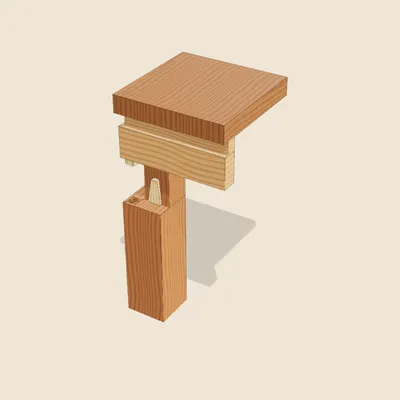
Long and short blind tenons into the underside of the frame, the deeper one in the long side.
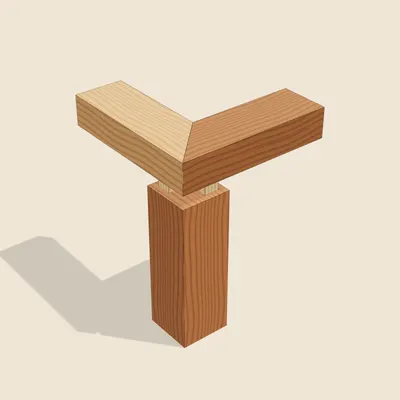
Long-and-Short Tenons
chángduǎn sǔnTwo tenons at right angles on the top of a leg: a long one for the long side, a short one for the end.
Explore the joint →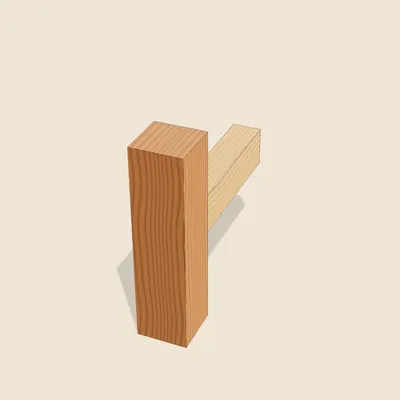
Blind Tenon
bàn sǔnThe tenon stops inside the post, so nothing shows on the outside: neat, a little less strong than a through tenon.
Explore the joint →3Leg, waist and apron
The baojian joint; the best old examples cut waist and apron from one piece.