Waisted square table
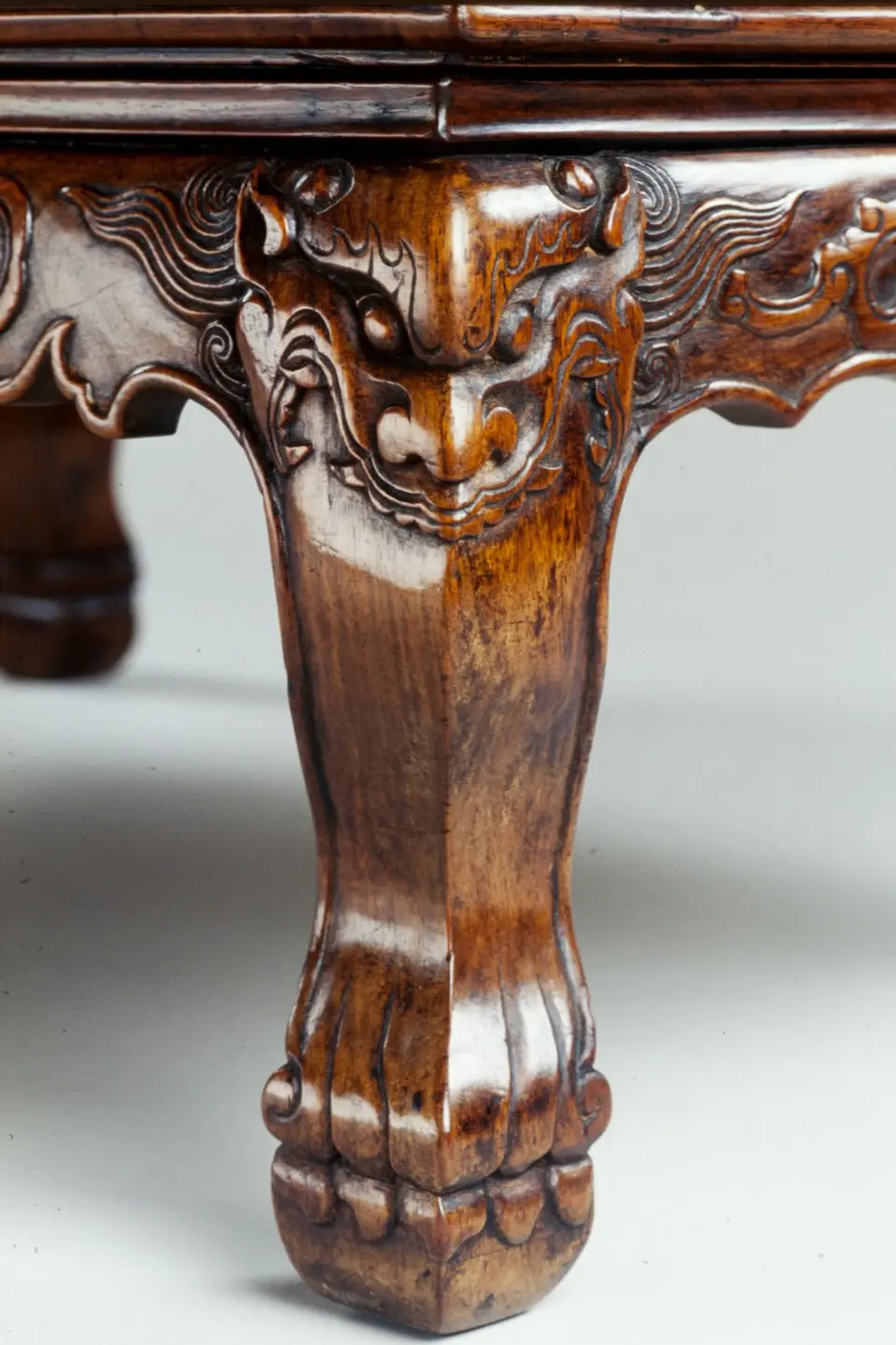
A waisted (有束腰) square table has a recessed waist under the top, an apron flush with the legs, and legs that usually end in horse-hoof feet. Here is what holds it together, from the top down.
1Top frame
Two long sides and two ends joined at the corners with mitred tenons, grooved inside for the panel.
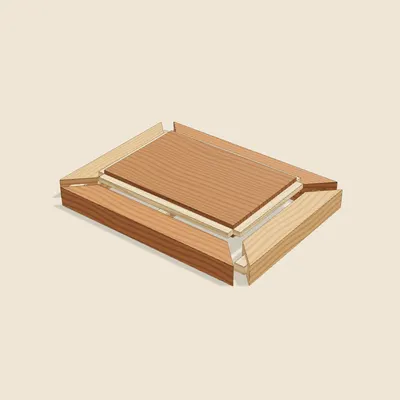
Frame and Floating Panel
cuánbiān dǎcáo zhuāngbǎnA mitred frame grooved on the inside, a thin panel with a tongued edge floating in the groove, and battens underneath.
Explore the joint →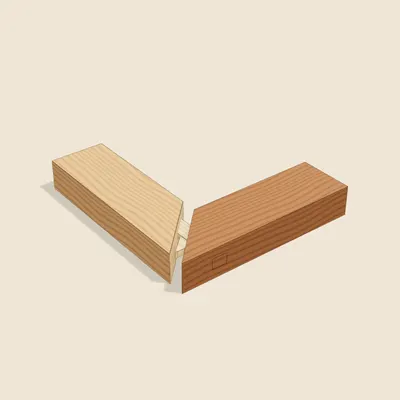
Mitred Frame Joint
géjiǎo sǔnThe 45° corner of every Chinese frame-and-panel top: a tenon through the end plus a little triangular tongue.
Explore the joint →2Panel
Thin boards edge-joined into one panel, held flat by battens tenoned into the long sides.
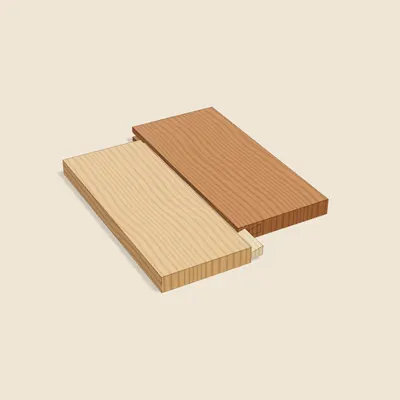
Longfeng Board Joint
lóngfèng sǔnA half-dovetail tongue on one board slides into a matching groove in the next, so the seam can neither step nor pull apart.
Explore the joint →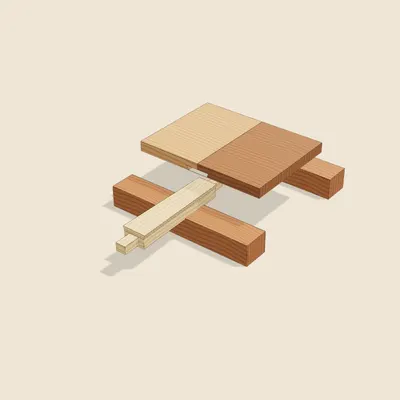
Sliding Dovetail Batten
chuāndàiA tapered dovetail batten driven across the back of a panel, its ends tenoned into the frame: the reason old tabletops stay flat.
Explore the joint →3Leg top into the top frame
Each leg carries two blind tenons, one long and one short, into the underside of the frame.
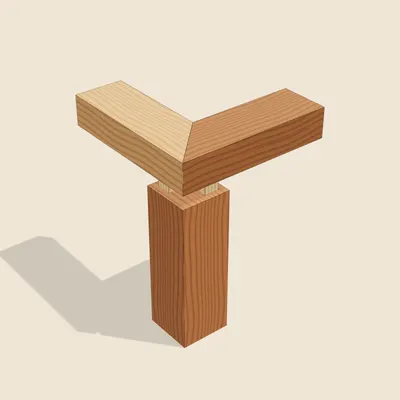
Long-and-Short Tenons
chángduǎn sǔnTwo tenons at right angles on the top of a leg: a long one for the long side, a short one for the end.
Explore the joint →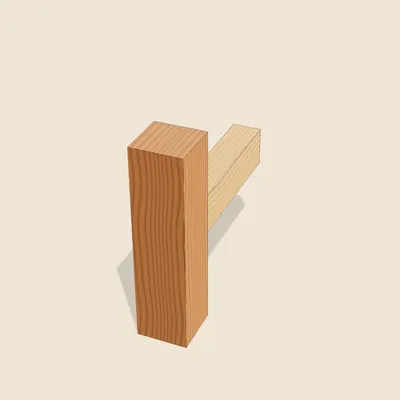
Blind Tenon
bàn sǔnThe tenon stops inside the post, so nothing shows on the outside: neat, a little less strong than a through tenon.
Explore the joint →4Leg, waist and apron
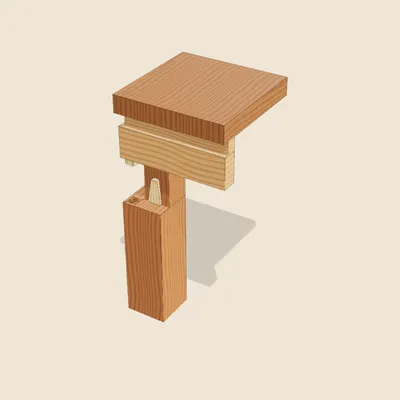
The corner of leg, waist and apron is locked by the baojian joint with its hanging pin.
5Bracing
Instead of stretchers, many waisted tables use an S-shaped brace from the inside of each leg up to a batten under the top.
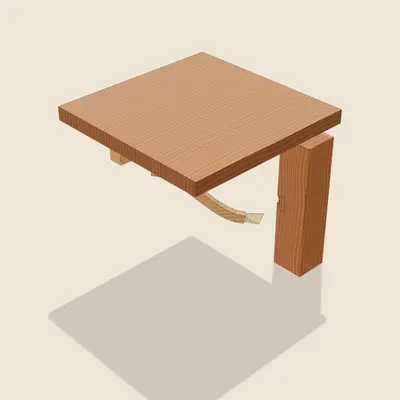
Giant’s-Arm Brace
bàwáng chéngAn S-curved brace from the leg up to the underside of the top, hooked into the leg and locked with a wedge.
Explore the joint →Sliding Dovetail Batten
chuāndàiA tapered dovetail batten driven across the back of a panel, its ends tenoned into the frame: the reason old tabletops stay flat.
Explore the joint →